
Panic bar installation in Philadelphia
Exit door not latching the way it should? Planning a security upgrade that includes reliable egress hardware? Whether the work is a new installation, a hardware upgrade, or a device that’s stopped operating correctly, Ben Locksmith Philadelphia provides mobile commercial locksmith service across Philadelphia and can come to your property to assess the door, recommend compatible hardware, and install and test panic bar and exit device hardware.
Available 24/7. Call (267) 585-6033 to set up a visit.
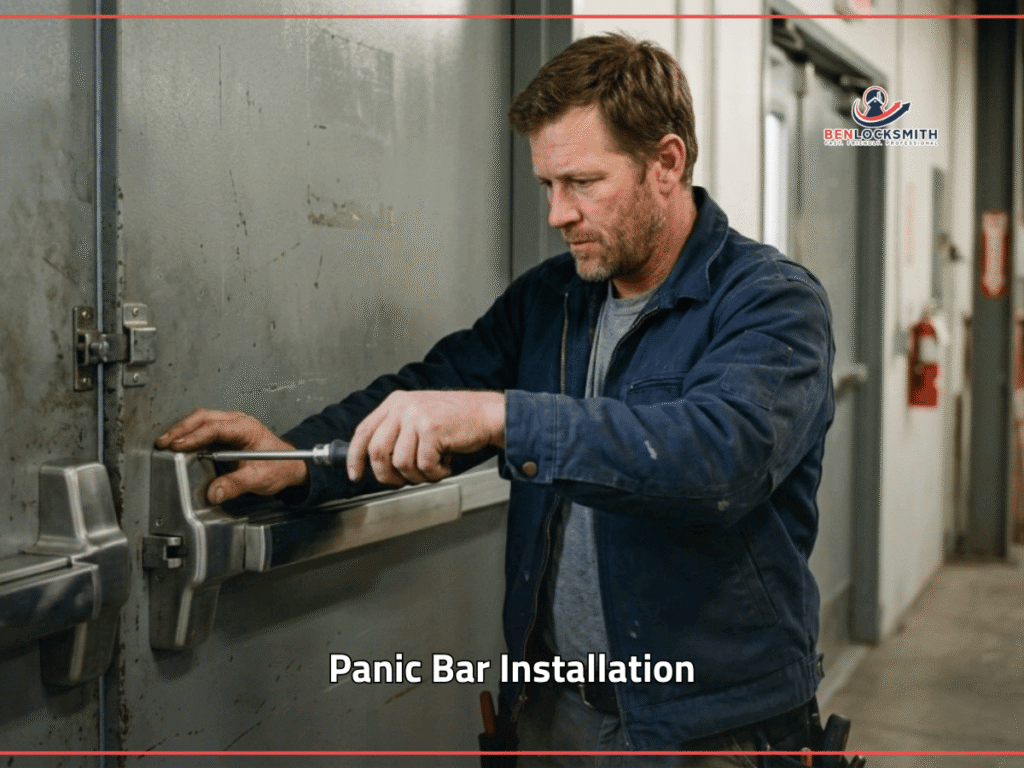
Panic bar and exit device installation for Philadelphia businesses
A panic bar, also called a crash bar or exit device, is door hardware that lets people unlatch an exit door from the inside just by pushing on it, no key or twisting a handle required. It’s built for situations where people need to get out quickly and reliably.
Not every commercial door needs one. Whether a specific opening should have panic hardware depends on the door itself, the frame, how the space is used, the existing hardware, and whether the opening is part of a fire-rated door assembly. We look at the actual door in front of us rather than assuming one answer fits every building.
What we inspect before recommending hardware
Before we talk about a specific device, we look at the opening itself: the door material and condition, how well the door and frame line up, whether it’s a single door or a pair, the condition of the existing latch and strike, whether a door closer is installed and working correctly, swing and clearance, whether the door needs exterior entry hardware, and any visible fire-door labeling.
That inspection matters because the same-looking door can call for different hardware depending on what’s actually installed and how the building uses that opening. Two doors that look identical from the outside can have completely different frame prep, closer settings, and latch conditions underneath.
Local requirements and the Authority Having Jurisdiction (AHJ) can also affect which hardware is appropriate, so we treat the visible condition of the door as a starting point, not the final word on what’s required. We’re happy to install a straightforward lock installation on a door that doesn’t need exit hardware at all.
Panic hardware options we can assess and install
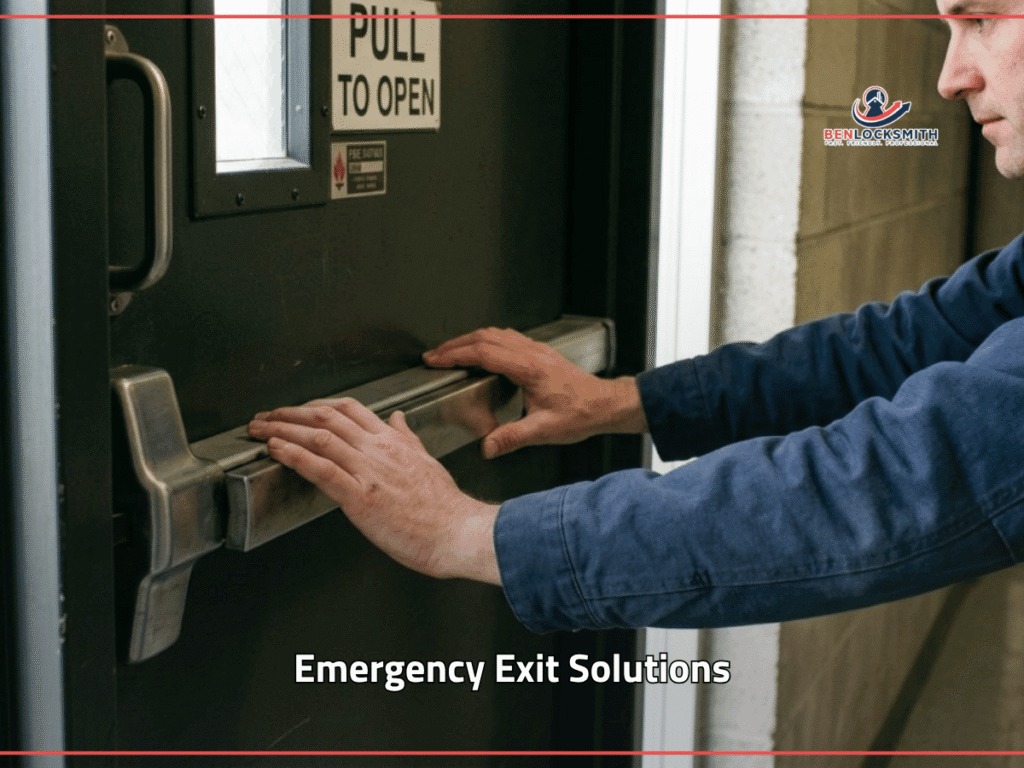
Exit devices come in a few common configurations, and which one fits depends on the door. A rim device mounts on the surface of the door and latches into a strike on the frame; it’s the most common setup for single doors.
A vertical rod device runs rods up (and sometimes down) the door to latch into the frame or floor, which is typically the right call for a pair of doors that both need to open independently. A mortise exit device sits inside a pocket cut into the door edge and tends to show up where a heavier-duty setup makes sense.
Some businesses also want an alarmed or electrified exit device as part of a broader entry-monitoring or controlled-access setup. That’s something we can assess, but it depends on compatible hardware and the specific system in place at your property.
Fire-rated doors, egress, and code considerations
Panic hardware and fire exit hardware are not the same thing, and they aren’t interchangeable on every opening. A fire-rated door assembly generally needs hardware that’s specifically listed for that use, and the door assembly’s rating has to be preserved by whatever hardware goes on it.
Building, fire, accessibility, and local requirements vary by property and by jurisdiction, so we don’t present ourselves as a certification authority. We assess the opening and explain what we see, but for a project where compliance sign-off matters, confirm the specific requirements with your local Authority Having Jurisdiction or a qualified code professional.
Our job is to install hardware that operates correctly and matches what we find on your door; the final compliance determination for a given occupancy sits with the AHJ, not with us.
Need a professional panic bar installation service? Give us a call
Whatever your locksmith needs, we’ve got you covered.
How our panic bar installation process works
- Call or reach out and describe the door and the problem, or the project you’re planning.
- We come to your property and inspect the opening in person.
- We explain the compatible options, repair when the existing hardware allows it, replacement when it doesn’t, and give you a clear estimate before any work begins.
- Once you approve the work, we install and align the hardware.
- We test the latching, the push operation, and overall function, then review the completed work with you.
We don’t publish fixed prices for this work. The hardware, the door’s condition, and what the opening actually needs all affect the estimate, which we explain before starting anything.
Integrating exit hardware with access control
Some commercial doors need to do two things at once: let people out immediately in an emergency, and manage who can get in from the outside. That might mean a credentialed entry reader, an alarm tied to the door, or status monitoring on whether the door is open or closed.
Exit function has to stay intact no matter what’s added on the entry side, so any integration gets assessed for the specific door and system rather than treated as an off-the-shelf add-on. If you’re planning a broader access-control setup beyond a single exit door, our access control systems page covers that in more depth.
Why Philadelphia businesses call Ben Locksmith Philadelphia
We provide mobile commercial locksmith service at businesses and managed properties throughout Philadelphia, available 24/7. Our locksmiths are insured and background checked, and the work is backed by a 1-year warranty on parts and labor that covers both the hardware installed and the labor behind it.
We typically aim to reach customers in around 30 minutes, though location, traffic, technician availability, and call volume can push some calls longer, so call for a current estimate.
Panic bar installation/repair service across all Philadelphia neighborhoods
We repair and install panic bar / exit devices throughout Philadelphia, including vertical rod device or electrified exit devices damaged, difficult to operate, or no longer securing the door properly.
Center City & downtown Philadelphia
Center City, Rittenhouse Square, Old City, Washington Square West, Midtown Village and Logan Square.
South Philadelphia
Bella Vista, Queen Village, Passyunk Square, East Passyunk, Pennsport and Point Breeze.
North Philadelphia & nearby neighborhoods
North Philadelphia, Fishtown, Fairmount, Northern Liberties, Poplar, Port Richmond, Brewerytown, Olde Kensington, Hartranft, Fairhill, Kensington, Spring Garden and Cecil B. Moore.
West Philadelphia
University City, Powelton Village, Cedar Park and Spruce Hill.
Northeast Philadelphia
Mayfair, Frankford, Tacony, Bustleton and Fox Chase.
Northwest Philadelphia
Manayunk, Roxborough, East Falls, Germantown, Chestnut Hill and Mount Airy.
Panic bar installation FAQs
How much does it cost to install a panic bar?
It depends on the door, frame, existing hardware, the type of exit device, and whether related work is needed, strike alignment, closer adjustment, alarm hardware, or access-control integration.
We inspect the opening, explain the recommended work, and give you a clear estimate before starting. You decide whether to proceed.
Can a panic bar be installed on any door?
Not automatically. Door material, width, thickness, frame, swing, the existing latch and strike, a paired-door setup, and any fire-door label can all affect the right hardware and installation method. We inspect the opening first and explain compatible options.
If the door is part of a fire-rated assembly or has specific egress requirements, the final choice may also need to account for local requirements and the AHJ.
How high should a panic bar be off the ground?
Mounting position matters for both function and accessibility, but the correct height for your specific opening should be confirmed against applicable requirements rather than a generic number.
We assess the door and the device’s requirements before installation, then align and test the hardware once it’s in place. For a code-sensitive project, confirm final requirements with the AHJ or a qualified code professional.
What are the installation code requirements for panic bars?
Requirements can depend on building use, occupant load, door location, whether the opening is fire-rated, accessibility rules, and local enforcement. Panic hardware and fire exit hardware aren’t interchangeable in every application.
We can inspect the door and explain the hardware options, but an AHJ or qualified code professional should confirm project-specific requirements when that sign-off matters. The finished device should allow the intended exit operation and be properly installed, aligned, and tested.
Request panic bar installation or repair
Call (267) 585-6033 and let us know your property location, the door type if you know it, whether the door is sticking or failing to latch, and whether you need an alarmed or controlled-entry setup. For an immediate threat to life or safety, an active burglary, or someone trapped, call 911 first.
Fast response
Average 30 minutes response time
Local service
Serving Greater Philadelphia
24/7 Emergency
Always here when you need us