
Access control systems installation in Philadelphia
Some situations make the need for access control obvious overnight. An employee leaves on bad terms and still has a key to your office. A contractor who worked in your building six months ago never returned their keycard. You get a call on a Sunday that someone was in your warehouse and you have no way of knowing who or when. Traditional locks don’t give you answers, and rekeying every time someone leaves isn’t sustainable.
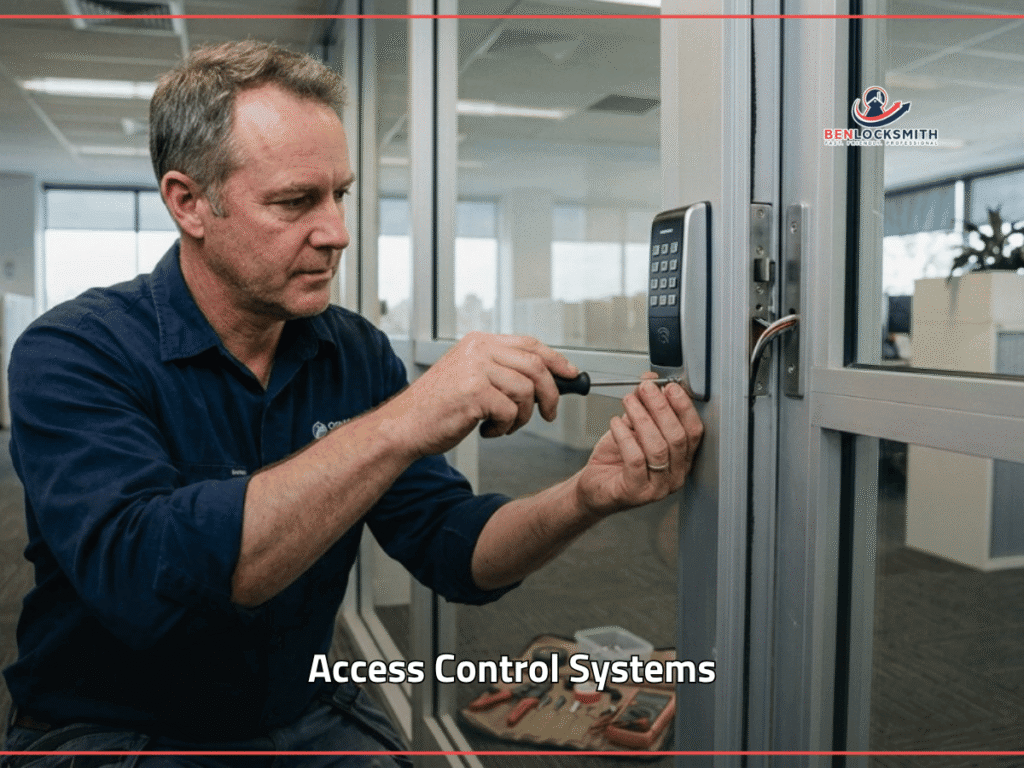
At Ben Locksmith Philadelphia, we install commercial access control systems for businesses, property managers, schools, medical offices, and industrial facilities throughout the city. If you need to control who gets in, when, and with a record of every entry, call +1 267-585-6033 or request a commercial quote online.
For a broader look at our commercial services, visit our commercial locksmith Philadelphia page.
The situations that actually bring people to access control
Most clients don’t call us because they read an article about building security. They call because something happened or almost happened.
An employee left and the situation wasn’t clean: This is the most common trigger we see. Whether it was a termination or a resignation, the moment someone walks out with active credentials is a liability. With a traditional key, you’re either rekeying the entire building or hoping they never come back. With access control, you deactivate that credential in under a minute from your phone.
You’ve had an internal theft or an unauthorized access incident: No forced entry, no broken windows. Someone got in who shouldn’t have. Access control gives you an entry log so you know exactly who was where and when, which changes everything about how you handle the situation.
You’re opening a new location or renovating and need the building set up correctly from day one: Getting access control installed before you open is significantly easier than retrofitting it into an occupied space later. We work with businesses in this phase regularly, especially in Fishtown, Northern Liberties, and Center City where new commercial buildouts are constant.
A security audit flagged your building: Healthcare facilities, schools, and government-adjacent contractors often have compliance requirements around access control. If an audit identifies gaps, we can address them with hardware and documentation you can hand back to your auditor.
Why traditional keys don't scale
A single key is not a security system. It’s a piece of metal that can be copied at any hardware store, that gives you no information about when or how often it was used, and that costs you a full rekey every time someone leaves the company.
For a small operation with two or three employees and one door, keys are fine. But the moment you have multiple entry points, shift workers, vendors with limited access needs, or any kind of staff turnover, the math stops working. Access control solves all of it in one system. You can read more about rekeying as a transitional solution on our lock rekeying page.
Which type of system fits your building
This is where most content fails you by just listing product names. Here’s the practical version based on what we actually install in Philadelphia.
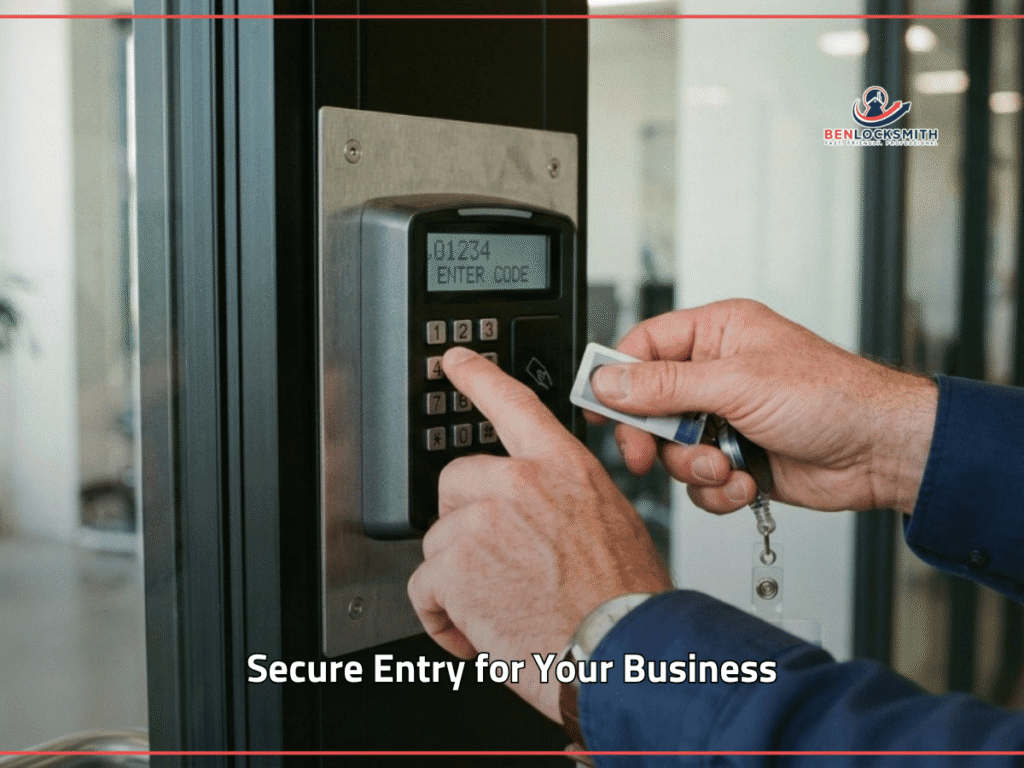
Keycard and key fob systems are the right call for most offices, multi-tenant buildings, and mid-size commercial properties. They’re easy to manage, credentials are hard to duplicate unlike physical keys, and the system logs every entry. If someone loses their card, you deactivate it immediately and issue a new one. No locksmith visit required. This is the most common system we install.
Keypad entry systems work well for smaller spaces, storage rooms, or employee-only areas where you don’t need individual credential tracking. The code can be changed instantly when needed. The tradeoff is that you can’t track who entered, only that someone with the code did. Good for low-traffic secondary doors, less ideal as your primary security layer.
Biometric systems using fingerprint or facial recognition are suited for high-security environments: server rooms, pharmaceutical storage, restricted research areas, and financial back offices. The credential is the person, so there’s no card to lose or code to share. Higher cost and more involved installation, but the right tool for the right situation.
Cloud-based and mobile access systems let you manage everything remotely. Add a user, remove a credential, pull an entry log, or unlock a door for a delivery, all from your phone or laptop. For property managers running multiple buildings or business owners who aren’t on-site every day, this is often the most practical option. We can also integrate these with smart lock installation if part of your building uses that hardware.
Electrified panic bars combine access control with emergency egress compliance. The door stays locked from the outside and allows free exit from the inside, with the added ability to tie into your access control system. If you’re also looking at exit device requirements, see our panic bar installation page.
What makes Philadelphia buildings more complicated
This is something generic content never covers. A significant portion of commercial properties in Philadelphia, especially in Old City, Center City, South Philly, and Germantown, are in buildings that were never designed for low-voltage security wiring. Brick construction, original steel door frames, non-standard door widths, and decades of previous tenant buildouts all create real complications.
We assess the building before we recommend any hardware. That assessment looks at the existing wiring, door frame condition, available power sources near each entry point, and whether the doors are fire-rated. Installing access control on a fire-rated door without the right hardware configuration is an immediate code problem, and we’ve seen plenty of systems installed by contractors who skipped that step.
For buildings where running new wire is genuinely difficult, wireless access control options have improved significantly and are now a viable alternative for certain applications. We’ll tell you which approach makes more sense for your specific building, not just which one is faster to install.
Repair vs new installation
If you already have an access control system that’s partially functional, malfunctioning, or just outdated, replacement isn’t always the answer. We service and upgrade existing systems regularly. Sometimes it’s a credential reader that’s failed, sometimes the door controller needs replacement, and sometimes the system just needs to be reconfigured for a tenant change.
If your current system is beyond reasonable repair or the software is no longer supported, we’ll tell you that clearly and walk you through a replacement that doesn’t require you to start completely from scratch on hardware.
Need a professional Access control systems installation service? Give us a call
Whatever your locksmith needs, we’ve got you covered.
What access control installation costs in Philadelphia
The $1,500 to $10,000+ range you see everywhere is true but not particularly useful. Here’s what actually moves the number:
Single door, keypad or key fob system in a building with accessible wiring and a standard door: $1,500 to $2,500 installed.
Two to four doors, keycard system with a basic management panel: $3,000 to $5,500 depending on door conditions and wiring complexity.
Multi-door cloud-based system with remote management and mobile access: $5,000 to $9,000+ depending on the number of entry points and integration requirements.
Biometric system, single door: $2,000 to $4,000 installed depending on the reader technology.
Older Philadelphia buildings with significant wiring challenges or non-standard frames: add $300 to $800 per door in preparation work.
Wireless access control (where wired installation isn’t practical): varies by system, typically $1,800 to $3,500 for a single-door setup.
We provide itemized quotes after the site assessment. You’ll know the full cost before anything gets installed.
How the installation works
We start with a walkthrough of your building. We’re looking at every door you want controlled, the path for wiring, the power availability, frame condition, and any compliance considerations specific to your building type. For healthcare or school environments, that compliance check matters a lot.
After the assessment we present options. Not a single take-it-or-leave-it quote, but a clear breakdown of what each approach costs and what you get for it. Once you decide, we handle the full installation including hardware mounting, wiring, controller setup, credential programming, and a walkthrough of the management software so you actually know how to use it when we leave.
We also make sure the system integrates correctly with any existing security hardware. If you have a commercial lockout situation while a system is being installed or upgraded, we handle that separately and immediately.
Frequently asked questions
What happens to the system during a power outage?
Most commercial access control systems run on battery backup or fail-safe configurations. Fail-safe means the door unlocks when power is lost, which is required for fire egress. Fail-secure means it stays locked. We configure each door appropriately based on its function and compliance requirements.
Can I add or remove users myself after installation?
Yes. That’s one of the main advantages. With a cloud-based or panel-managed system, you manage credentials yourself through a web portal or app. We set you up and train you on it. You don’t need to call us every time someone new starts or leaves.
How long does installation take?
A single-door system typically takes three to five hours. Multi-door commercial installations usually run one to two days depending on wiring complexity. We’ll give you a realistic timeline during the assessment.
Can this integrate with cameras or alarms?
Yes. Access control, CCTV, and alarm systems can work together so that an access event can trigger a camera recording or flag in your monitoring system. We handle the locksmith and access hardware side and can coordinate with your security camera provider if needed.
Does this work with the panic bars on my fire exits?
Yes, through electrified panic bars. The door maintains free egress at all times while still being controlled from the outside. This is a common configuration in offices and retail spaces that have fire exit requirements. We make sure the setup is fully code-compliant.
What if I only need to control one door right now?
That’s fine. We install single-door systems regularly, and most platforms are expandable so you can add doors later without replacing the core system.
Schedule your access control consultation
If you’re dealing with a credential problem, a security gap, or you’re just ready to stop managing physical keys, we’re ready to help. Call +1 267-585-6033 or request a commercial quote online.
We also handle door lock repair, master key system setup, and high-security lock installation if you’re addressing multiple layers of your building’s security in the same project.
Ben Locksmith Philadelphia serves commercial properties throughout the city including Center City, Old City, Fishtown, Northern Liberties, Kensington, Port Richmond, South Philly, Germantown, and Northeast Philadelphia.
Fast response
Average 15-20 minutes response time
Local service
Serving Greater Philadelphia
24/7 Emergency
Always here when you need us