
Ignition switch repair in Philadelphia
If your car key is starting to feel stiffer than it used to, or your ignition fails to respond one out of every ten tries, or you notice it takes two attempts to start a car that used to start on the first turn, you’re in a different situation than someone who is completely stranded. You still have options, and one of them is repair rather than replacement.
That distinction matters because ignition repair costs significantly less than full replacement, can be completed on-site at your location in Philadelphia, and in many cases extends the life of your current system by years. At Ben Locksmith Philadelphia, we diagnose ignition problems and repair what can be repaired before we talk about replacing anything. Call +1 267-585-6033 for mobile ignition service anywhere in the city.
For a full overview of our automotive services, visit our automotive locksmith Philadelphia page.
How this page is different from ignition replacement
We have two pages on ignition service and it’s worth being direct about which one applies to your situation.
This page is for customers who have a problem that’s developing or intermittent. The ignition is getting harder to use. The key sticks occasionally. The car fails to start sometimes but not always. You’re noticing something is wrong but you’re not completely stranded yet.
The ignition switch replacement is for customers with severe or complete failure. The key won’t turn at all, the cylinder is visibly damaged, or there’s been a break-in attempt that compromised the hardware.
If you’re not sure which category you’re in, call us and describe what’s happening. We’ll tell you what it sounds like before anyone gets in a vehicle.
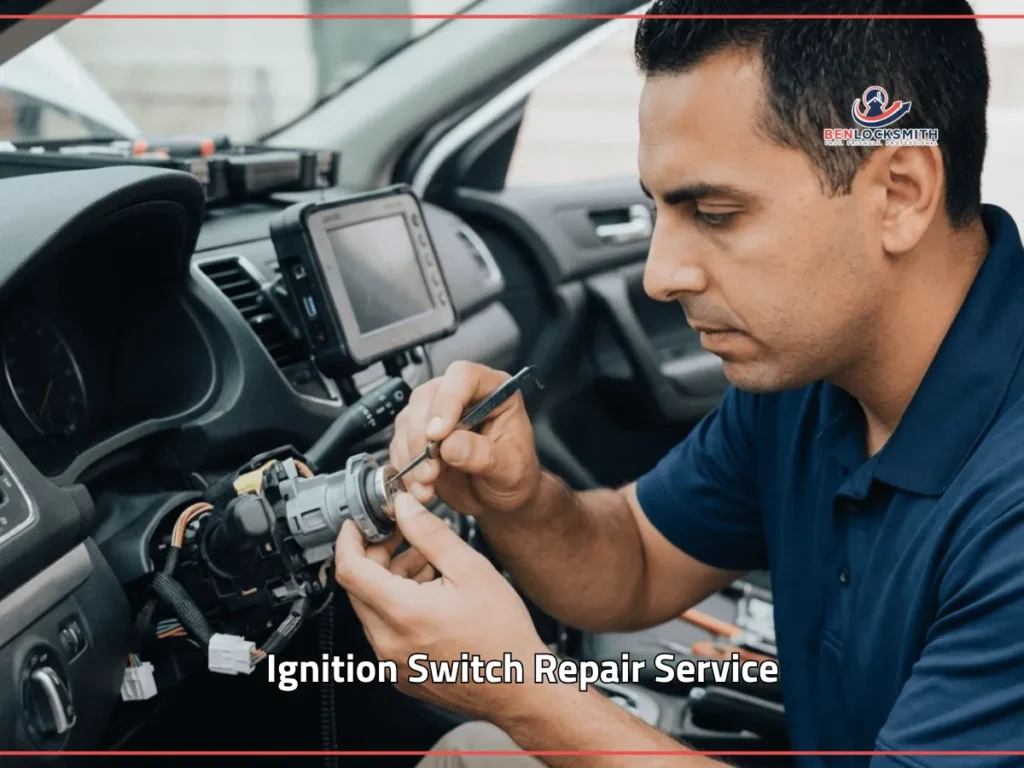
The signs that repair is still an option for you
The key difference between a repairable ignition and one that needs replacement comes down to whether the core components are worn or whether they’re broken or severely damaged.
Gradual stiffness when turning the key is almost always a wear issue. The ignition wafers, the small internal components that align with your key’s cuts and allow rotation, wear down over thousands of insertions. They’re still doing their job but with less precision than when the cylinder was new. In many cases this is addressable through cleaning, lubrication, and in some vehicles a wafer replacement without touching the cylinder housing.
Intermittent failure to start where the car starts fine sometimes and refuses other times is a diagnostic flag that the cylinder is at the threshold between functional and failed. The wafers are aligning correctly sometimes and not others. This is often repairable, but it’s also a sign that you’re closer to complete failure than you might think. Addressing it now costs less and avoids being stranded later.
A key that requires wiggling or repositioning to turn indicates cylinder wear rather than damage. The key cuts and the wafer alignment have both degraded to the point where they only work in a specific position. Repairable in most cases.
A key that turns but requires unusual force suggests internal debris, corrosion, or a partially worn wafer that’s creating friction. Cleaning and wafer service often resolves this without cylinder replacement.
Keys that occasionally get stuck can be cylinder wear, a broken internal spring, or a wafer that’s shifted out of position. We assess which one before deciding on an approach.
Need a professional Ignition switch repair? Give us a call
Whatever your locksmith needs, we’ve got you covered.
The signs that repair probably isn't enough
Being honest about the limits of repair is part of the job. These situations typically require replacement rather than repair.
A cylinder that was attacked during a break-in attempt has physical damage to the housing and internal components that can’t be rebuilt into reliable function. Replacement is the correct approach and usually the more cost-effective one because repair work on a compromised housing rarely holds.
A key that snapped off inside the ignition may or may not require cylinder replacement depending on where the fragment is and whether the extraction damages the internal components. We extract the fragment first and assess the cylinder afterward. More detail on that process on our broken key extraction service.
Cylinders with completely sheared wafers rather than worn ones typically need replacement because the wafer itself is gone rather than degraded. We determine this during the disassembly inspection.
Vehicles where the cylinder is integrated with the steering column electronics rather than being a standalone component often require replacement hardware because the rebuild option doesn’t exist for that design.
How we diagnose repair versus replacement on-site
We start with the key before we touch the ignition. A worn key that has lost its original cut profile can mimic ignition cylinder failure because the alignment between the key and the wafers is off at both ends. Cutting a new key from the original code sometimes resolves what looked like an ignition problem, and that’s a simpler and less expensive outcome than a cylinder rebuild.
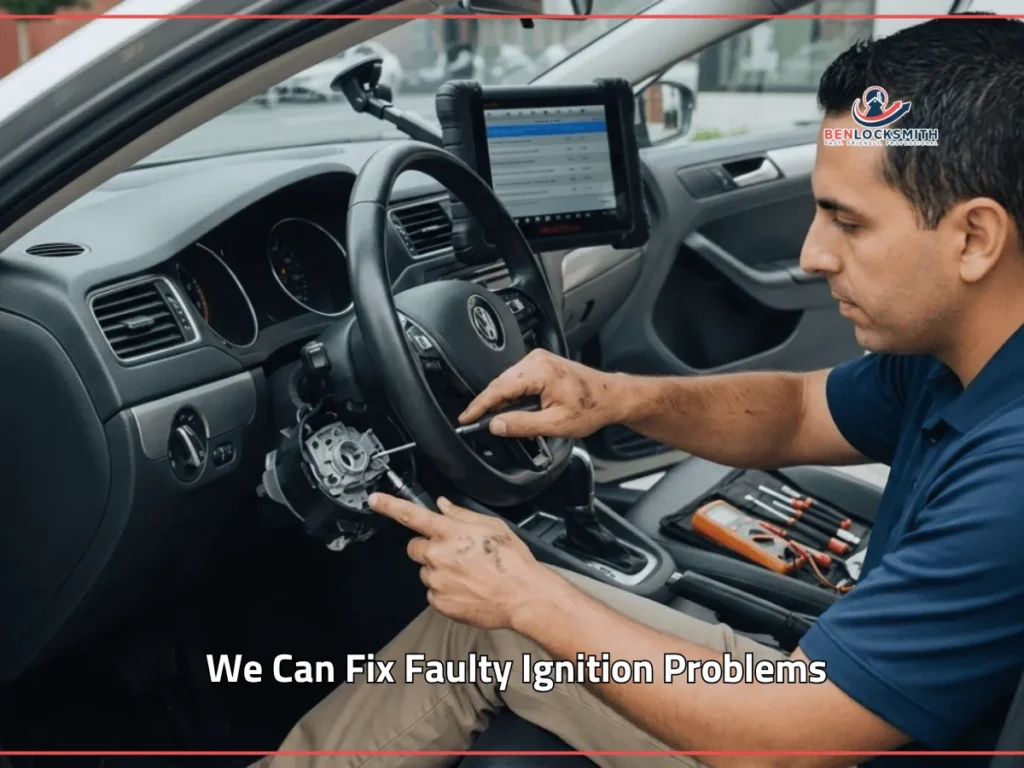
If the key checks out, we look at the cylinder mechanically. We test rotation, check for smooth operation throughout the turn range, and listen for sounds that indicate which internal components are involved. If repair is viable, we disassemble the cylinder, assess the wafers and springs individually, replace what’s worn, lubricate the mechanism, and reassemble. We test it through multiple cycles before we close the job.
If disassembly reveals damage that makes repair unreliable, we tell you that before we proceed further. You’ll know the options and costs before any additional work begins.
Push-to-start and newer vehicles
If your vehicle has a push-to-start system rather than a traditional keyed ignition, the situation is different and it’s worth addressing directly.
Push-to-start systems don’t have an ignition cylinder in the traditional sense. The physical key doesn’t insert into a mechanical lock. What they have is a key fob that communicates with the vehicle’s transponder system, and the button that starts the car is connected to the electronic start circuit rather than a mechanical cylinder.
When push-to-start systems fail, the problem is almost always electronic rather than mechanical: a dead or failing key fob battery, a transponder communication issue, or an electronic ignition switch failure that requires dealer-level diagnostic equipment in some cases. We handle key fob battery replacement and transponder issues on-site. For deeper electronic failures on push-to-start systems, particularly on newer vehicles from the last five years, we’ll tell you honestly if the problem requires equipment we don’t carry. More on key fob service on our key fob programming.
Vehicles where repair is most commonly viable
Older domestic and import vehicles from the late 1990s through the early 2010s with traditional keyed ignitions and standalone cylinders are the best candidates for ignition repair. These vehicles use ignition cylinders with replaceable wafers and standard internal components that we carry on our service vehicles. The rebuild process is well-established and the repaired cylinder typically performs reliably for years.
Vehicles from that same era with high mileage are actually more predictable in some ways because the wear pattern is gradual and even rather than the result of a specific failure event. A cylinder that’s been getting progressively stiffer over 150,000 miles is almost always a repair candidate. A cylinder that failed suddenly with no prior symptoms is more likely to have a broken component that requires replacement.
Newer vehicles from the mid-2010s onward increasingly use integrated cylinder designs that limit the repair option. We’ll tell you which category your vehicle falls into when you call with the year, make, and model.
Philadelphia driving and ignition wear
Urban driving in Philadelphia accelerates ignition wear in specific ways that are worth understanding if you’re trying to gauge where you are in the wear cycle.
Stop-and-go traffic means significantly more ignition cycles per mile than highway driving. A vehicle used primarily for city driving in Philadelphia, South Philly to Center City, Northeast Philly to University City, daily parking and restarting through congested corridors, accumulates ignition wear faster than the same vehicle would in a suburban commute context.
Winter in Philadelphia adds a layer. Cold temperatures make both keys and cylinders less forgiving of wear. A cylinder that operates adequately in September sometimes fails its first test on a January morning when everything is contracted and the lubrication in the mechanism has thickened. If you’re noticing more difficulty in cold weather specifically, that’s useful diagnostic information that points toward wear rather than damage.
Street parking throughout the city means the steering wheel lock engages frequently, which is worth ruling out before assuming ignition cylinder problems. If your key is hard to turn specifically when you first get in the car after parking on a hill or with the wheels cut, try turning the steering wheel slightly while turning the key. If that resolves it, there’s no ignition problem. We’ll tell you this on the phone if your symptoms match, because there’s no reason to pay for a service call for something you can handle yourself.
What Does Ignition Repair Cost in Philadelphia?
Ignition repair pricing depends on what’s actually wrong inside the cylinder — and that’s not something anyone can diagnose remotely. The cost of cleaning and adjusting a worn but otherwise healthy ignition is very different from the cost of rebuilding a cylinder with damaged internals or worn wafers.
What affects the cost of ignition repair?
What’s actually wrong. A sticky cylinder that needs cleaning and lubrication is a different job than one with worn wafers, damaged springs, or internal components that need to be replaced. The diagnosis determines the scope.
Vehicle make, model, and year. Standard domestic ignition designs are usually the most straightforward repairs. Imports, luxury brands, and vehicles with high-security or anti-theft integrated ignitions require different parts, tools, and labor.
Whether the key can be reused. If your existing key is too worn to operate the rebuilt cylinder reliably, a new key needs to be cut and, in many cases, programmed to your vehicle’s immobilizer. That’s part of doing the repair right.
Repair vs. replacement. Sometimes a repair makes clear sense. Other times, the wear or damage is significant enough that a full cylinder replacement is more cost-effective and more reliable long-term. We’ll give you both options honestly when that’s the case.
Time of day. After-hours and emergency calls require immediate technician availability, which factors into the job.
We start with an on-site diagnosis to confirm what’s wrong before quoting the repair. The price is given after we know what we’re dealing with inside the cylinder, not as a guess based on a phone description.
Call +1 267-585-6033. We come to your vehicle anywhere in Philadelphia and we’re available 24 hours.
Frequently asked questions
My ignition has been getting harder to turn for months. Is that repairable or does it mean replacement?
Gradual stiffness over months almost always indicates wafer wear rather than damage, which is the most repairable scenario. The longer you wait the more the wear progresses, but if you’re at the stiff but functional stage you’re likely still a good repair candidate. We’ll confirm that on arrival.
How long does a repaired ignition last?
A properly rebuilt cylinder with replaced wafers and new lubrication typically performs reliably for several more years of normal use. We don’t give lifetime guarantees on repaired components the way we would on new hardware, but a well-executed repair is not a temporary fix. It’s a restoration of the component to functional condition.
Will my current key still work after the repair?
In most cases yes. We rekey the repaired cylinder to your existing key whenever the key is in acceptable condition. If your key has worn down enough to contribute to the cylinder problem, we’ll show you the wear and explain why cutting a new key is the right call alongside the repair.
Can you do ignition repair in a parking garage or on a narrow street?
Yes. We work in parking structures, surface lots, and residential streets throughout Philadelphia. Mention your location when you call and we’ll account for any access considerations.
What if you open it up and it needs replacement instead of repair?
We tell you before we proceed further. You’ll have the full picture, including the replacement cost, before you decide how to move forward. The diagnostic work we’ve done to that point is charged at the assessment rate regardless of which direction you go.
Get your ignition assessed today
If your ignition is showing early signs of wear or failing intermittently, addressing it now costs less and is less stressful than dealing with a complete failure later. Call +1 267-585-6033 for mobile service anywhere in Philadelphia, available 24 hours a day.
We also handle car lockout and car key replacement if you’re dealing with related issues in the same visit. For urgent situations, visit our emergency locksmith Philadelphia service.
Fast response
Typically around 30 minutes
Local service
Serving Greater Philadelphia
24/7 Emergency
Always here when you need us